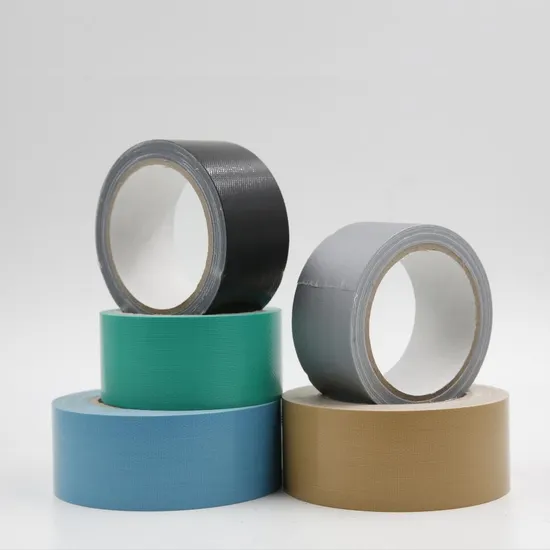
In the precise framework of the industrial system, tape processing equipment, as a key support for tape production, is undergoing all-round technological innovation and industrial upgrading. Core equipment such as tape slitting machines, cutting machines and rewinding machines have not only reshaped the production process of tapes through technological iterations, but also expanded the application boundaries of tape products in both depth and breadth, driving the entire industry towards high-end and intelligent directions.
Take the tape slitting equipment as an example. In the specialized field of packaging tape production, the technological upgrade of BOPP tape slitting machines is particularly significant. Advanced digital servo control systems have become standard equipment for high-end models. By precisely regulating the motor speed, tool position, and material conveying speed, ultra-high-precision control of slitting dimensions has been achieved. The tolerance range can be stably maintained within ±0.05mm. Compared with traditional mechanical control methods, the precision has been improved several times. It effectively guarantees the consistency and stability of the packaging tape in terms of size and specification, meeting the strict requirements of the modern packaging industry for refined and standardized production. In terms of efficiency, thanks to the innovative research and development of high-speed cutting tool materials and the collaborative optimization of the automated feeding and winding systems, the new BOPP tape slitting machine has achieved a slitting speed of over 400 meters per minute, with a production capacity increase of more than 60% per unit time. Market research institution data indicates that the global BOPP tape slitting machine market size climbed to 2 billion US dollars in 2024. It is expected to grow steadily at a compound annual growth rate of around 8% during the period from 2024 to 2029, highlighting the strong development resilience and potential of this niche market.
The tape rewinding machine has also made significant progress on the road of intelligent transformation. The new generation of rewinding equipment integrates advanced tension closed-loop control technology. It uses high-precision tension sensors to collect tension data in real time during the tape rewinding process and feeds it back to the control system through intelligent algorithms. It dynamically adjusts the torque output of the rewinding motor to ensure that the tape maintains a constant and appropriate tension throughout the rewinding process. It effectively avoids quality defects such as tape wrinkling, deformation and even breakage caused by tension fluctuations. In terms of operational convenience and production flexibility, human-machine interaction interfaces based on the industrial Internet architecture are widely applied. Operators can conveniently input rewinding parameters such as coil diameter, number of layers, and tension setting values through the visual interface, and the equipment can automatically complete complex rewinding tasks according to the preset program. Not only that, some high-end rewinding machines also have remote monitoring and fault diagnosis functions. With the help of Internet of Things technology, equipment managers can obtain real-time data on the operation status of the equipment, achieving remote operation and maintenance of the equipment, which greatly improves the operational reliability and maintenance efficiency of the equipment. The application proportion of such intelligent rewinding machines in high-precision and advanced industries such as electronics and medical care has been increasing year by year, effectively promoting the dual improvement of the production quality and efficiency of tape products in related industries.
In the field of special tape processing, the special tape slitting machine, with its customized professional design and advanced processing technology, has become a key equipment to meet the diverse demands of emerging industries. For tapes with special performance requirements, such as high-temperature resistant and high-strength tapes used in the aerospace field, as well as high-conductivity and high-insulation tapes serving the electronic information industry, the special tape slitting machine adopts special alloy tool materials and combines precise tool grinding processes and cutting path planning algorithms. Under the premise of ensuring no damage to the special functional coating and internal microstructure of the tape, precise slitting of complex shapes and high-precision dimensions has been achieved. Taking the special tape slitting used for the packaging of power battery modules in new energy vehicles as an example, the special tape slitting machine can precisely slitt the tape into packaging strips of specific sizes and shapes according to the design specifications of the battery modules. Its cutting accuracy can reach ±0.1mm, effectively ensuring the sealing and safety of the battery module packaging. It provides solid supporting facilities for the vigorous development of the new energy vehicle industry. With the rapid rise of strategic emerging industries such as 5G communication, artificial intelligence and new energy, the demand for special tapes has shown an explosive growth trend, which in turn has driven the rapid expansion of the market size of special tape slitting machines. It is expected that the market size will double in the next 3 to 5 years.
With the in-depth implementation of the concepts of Industry 4.0 and intelligent manufacturing, the application scenarios of automatic cutting machines in the tape processing industry are constantly expanding and are gradually becoming the core link in building an intelligent production system. The automatic cutting machine integrates cutting-edge technologies such as machine vision recognition, automatic control and intelligent logistics. It can quickly and accurately identify the patterns, marks and size information on the surface of the adhesive tape, and complete the cutting tasks of complex shapes through the high-precision cutting actuator according to the preset cutting program. In the production of label tapes, automatic cutting machines, relying on their high-speed and precise cutting capabilities, can achieve efficient production of hundreds of irregular-shaped labels per minute, with production efficiency several times or even dozens of times higher than that of traditional manual cutting methods. More importantly, the automatic cutting machine can be seamlessly integrated into the automated production line, achieving information sharing and collaborative operations with the upstream tape unwinding equipment, coating equipment, as well as the downstream winding and packaging equipment. This builds a highly automated and intelligent tape production line, significantly reducing manual intervention and effectively enhancing the stability of the production process and the consistency of product quality. Promote the accelerated transformation of the tape processing industry towards an intelligent manufacturing model.
Looking ahead, the tape processing equipment industry will continue to focus on technological innovation, deeply explore the application potential of new materials and new processes in equipment research and development, and constantly improve the processing accuracy, production efficiency and product quality stability of equipment to meet the growing market demand for high-performance tape products. Meanwhile, with the deep integration of new-generation information technologies such as the Internet of Things, big data, and artificial intelligence with manufacturing, tape processing equipment will continue to evolve towards intelligence, digitalization, and networking. Functions such as remote monitoring, fault early warning, and intelligent operation and maintenance of the equipment will be further improved, providing users with one-stop solutions throughout their entire life cycle. Help tape processing enterprises achieve cost reduction and efficiency improvement as well as innovative development in the fierce market competition, and promote the entire tape industry to move towards higher value links in the global industrial chain.