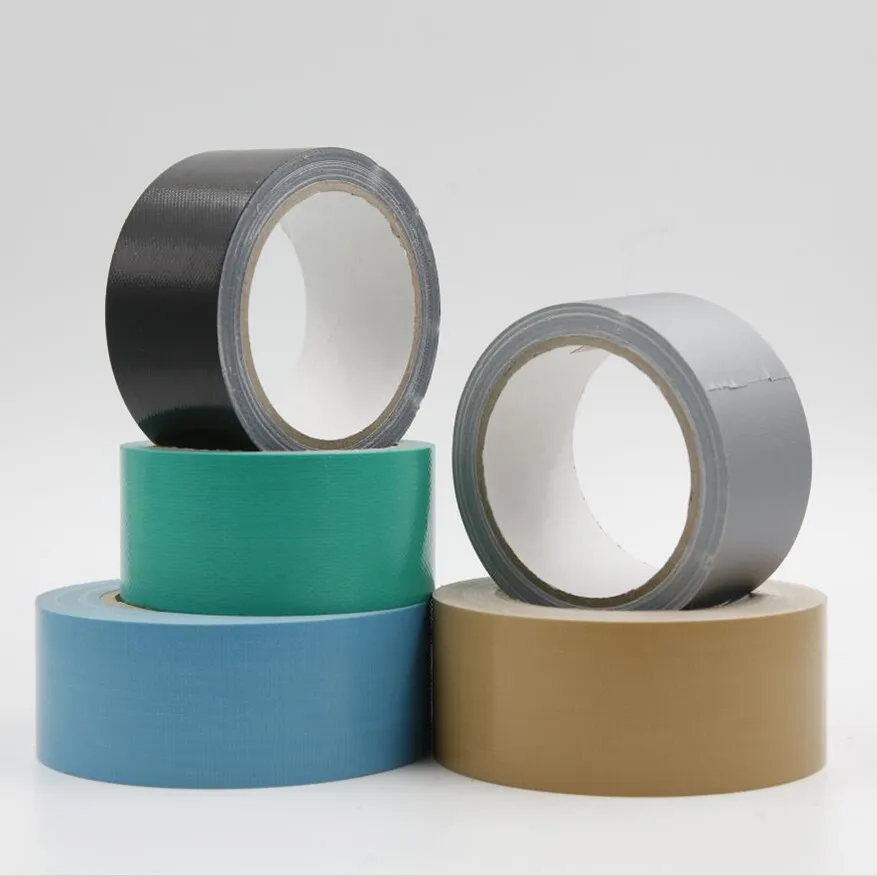
Driven by the demand upgrading of downstream industries such as packaging, electronics, and new energy, the tape equipment sector, centered on slitting, rewinding, and cutting machines, is experiencing an upsurge in intelligent transformation. Specialized equipment like BOPP Tape Slitting Machines and Special Tape Slitting Machines are accelerating their iteration, while Automatic Cutting Machines have achieved technological breakthroughs. These advancements are expected to push the market scale of China's tape equipment industry to 19.98 billion yuan in 2025, representing a year-on-year growth of 7.2%.
Core Equipment Iteration: A Qualitative Leap from "Functional" to "High-Performance"
In the post-processing stage of tape production, slitting and rewinding machines are key to improving efficiency. Traditional BOPP Tape Slitting Machines rely on manual adjustments, with a slitting accuracy of only ±0.5mm. In contrast, the new-generation equipment integrates high-precision servo systems and laser tracking technology, reducing the error to within ±0.05mm and increasing the speed to 300-500 meters per minute—3 to 5 times more efficient than traditional models. The intelligent slitting machine launched by Xiamen Delishi adopts four-axis automatic roll-changing technology, combined with a Teflon anti-adhesive embossing roller design, enabling continuous production of BOPP carton sealing tapes and stationery tapes while improving material utilization by 5%-10%.
Catering to the demands of high-end fields such as electronics and medical care, Special Tape Slitting Machines demonstrate strong adaptability. Through modular tool design and Single-Minute Exchange of Die (SMED) technology, the equipment can switch production lines from conductive tapes to high-temperature-resistant battery packaging tapes within 5 minutes, meeting the needs of small-batch customized production. A new energy enterprise successfully achieved burr-free slitting of tab tapes with a customized slitting solution, ensuring the safety of power batteries and seizing opportunities in the electric vehicle market.
The cutting equipment sector also showcases remarkable innovations. Automatic Cutting Machines integrate AI visual inspection and dynamic tape feeding technology. For example, the YAESU ZCUT-3EX model achieves a cutting accuracy of ±0.5mm, supports automatic cutting within a length range of 30-7000mm, and processes over 3,000 batches per day—8 times more efficient than manual operations. Its anti-static accessories and double-sided tape peeling function have become standard configurations for precision scenarios such as electronic component mounting. Meanwhile, Tape Rewinding Machines ensure stable tension control through slip-type center winding and pneumatic braking systems, further guaranteeing the quality of rolled materials.
Market Pattern: East China Leads, Export Growth Reaches 10%
Industry data shows that the market scale of China's tape equipment industry had reached 18.63 billion yuan by 2024. Among sub-sectors, slitting machines and rewinding machines accounted for 27.4% and 19.8% of the market share respectively, jointly becoming the second-largest segment. In terms of regional distribution, East China led the country with a scale of 6.82 billion yuan, accounting for 36.6% of the national total. Enterprises in Guangdong, Zhejiang, and other regions have formed industrial clusters leveraging their technological advantages. Leading enterprises such as Foshan Jingcheng Machinery and Dongguan Hengli Machinery have achieved a market share of over 5% through full-industry-chain layout.
The export market has performed particularly well. In 2024, China's tape equipment exports reached 2.94 billion yuan, a year-on-year increase of 9.8%, with emerging markets in Southeast Asia and Africa being the main growth drivers. With the advancement of the "Belt and Road" Initiative, Chinese equipment integrated with intelligent control and energy-saving technologies has seen a continuous increase in penetration in overseas markets. It is expected that the export growth rate will remain above 10% in 2025.
Future Direction: In-Depth Integration of AI and Green Manufacturing
Industry experts point out that the tape equipment industry is transitioning from "automation" to "intelligence". The next-generation equipment will deeply apply AI predictive maintenance technology, mapping equipment status through digital twins to reduce downtime by more than 30%. At the same time, the popularization of variable-frequency drives and intelligent standby functions will reduce equipment energy consumption by 20%-30%, aligning with the global trend of green manufacturing.
In terms of application expansion, cross-industry technology integration has become a new track. Ultra-precision equipment, drawing on semiconductor slitting technology, has achieved micron-level processing of ultra-thin OCA optical tapes. Additionally, high-temperature-resistant tape slitting solutions for the new energy sector are facilitating the upgrading of battery packaging processes. "The intelligence of equipment is not only an efficiency revolution but also a core driver for the tape industry to break into high-value-added fields," said a relevant person in charge of the China Rubber Industry Association.